
I never really wanted to live in New York. In a very ignorant way, I used to say that New York City was a much dirtier version of São Paulo, the state I came from in Brazil, “Why would I want that?” I used to think. But it was only after I moved here that I realized this is exactly where I was supposed to be. My partner is a proud Nuyorican, a non-profit lover, and a big fan of building community and kitchen-table cultural relationships. We’ve always loved sharing with each other content and organizations that could somehow enrich or expand our existence and our view of the world, and not surprisingly, it was through her that I first heard about Ross Perlin’s The Language City and started looking at the city as this rich linguistic and cultural space. She also introduced me to many Caribbean and Afro-diasporic projects and institutions like CCCADI and MoCADA, for example, and among those many and amazing initiatives there was the Queer Latines community.
Queer Latines – Language Practice Sessions
Alyssa Rodriguez is the founder of Queer Latines, an online collective for queer Latinx people to meet, connect, and build community. In 2024, my partner saw a post on the community’s Instagram page, which she had been following for a while, in which they were looking for volunteers to facilitate language practice sessions in both Portuguese and Spanish for young Latinos in the U.S. who do not speak fluent Spanish or Portuguese. And as I am both a Portuguese and English teacher, she right away shared it with me, saying, “I think you should volunteer.” And the fact that they were even looking for Brazilian Portuguese teachers made me feel like I should definitely reach out, as I had personally felt that Brazil was not always included when Latinidad was being discussed.
I responded to the stories, and Alyssa promptly reached out to me so we could schedule a call to discuss how I could contribute to the organization. I am forever grateful for the opportunity I had to talk with Alyssa about the specifics of being queer and struggling to find community or a safe space to learn and practice one’s heritage language. We spoke about how the work she was doing is an answer to our communities’ need to have a space “Where friendships form. Where language is reclaimed, where we don’t have to choose between being queer and being Latine.”
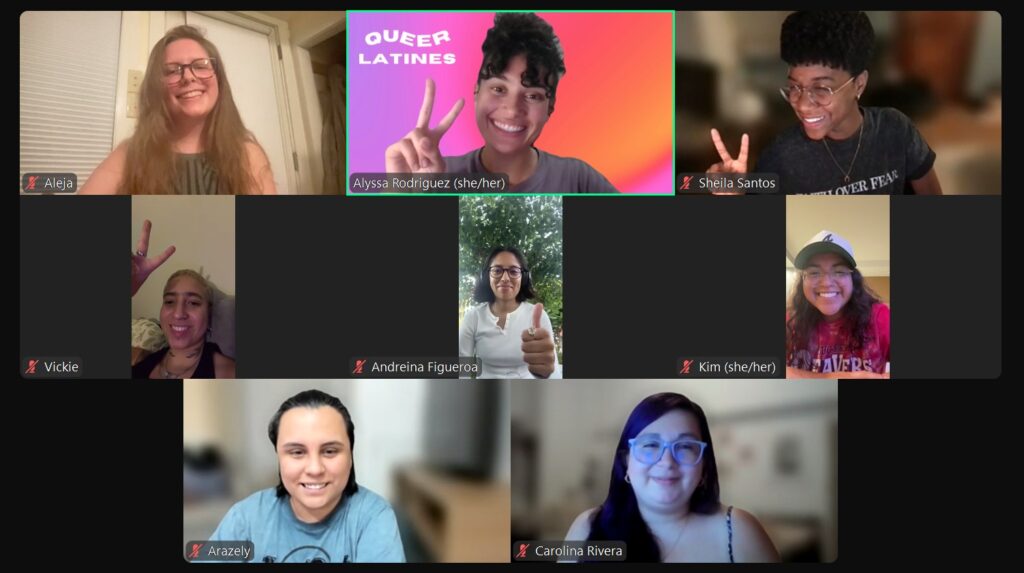
On my first time mediating the Language Practice Session, we had a mix of Brazilian-Americans and speakers of Spanish as a second language who were now learning Portuguese. What I loved and had the most fun with was that, at some point, we were all communicating in Portunhol, the língua do futuro. (Portunhol is the combination of Portuguese and Spanish and is often considered the language of the borders, where Brazil meets its neighboring Spanish-speaking countries, so the language spoken by local communities is what is often referred to as Portunhol Selvagem.)
The collective has a community on Discord divided into multiple categories, like parents, non-monogamous, and neurodivergent, to name a few. They frequently host bilingual in-person and online meet-ups, book clubs, holiday celebrations, and much more, and they have recently launched a complete Spanish program for intermediate to advanced learners.
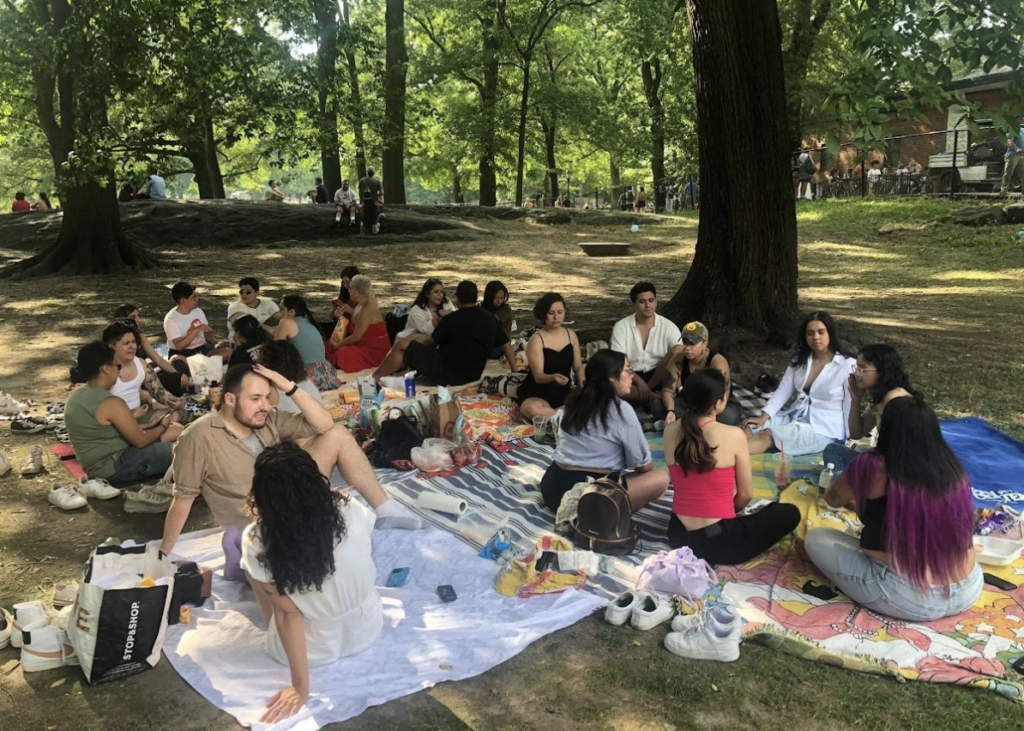
All of the communities and collectives I have joined since moving here have taught me many precious lessons, and they have continuously helped me notice and recognize both the beauty and the challenges of needing and finding community in the concrete jungle. I fell in love with the many New Yorks one can experience, and I might actually say I have been learning to call it home.


Thanks for this Sheila! I wasn’t aware of Queer Latines, and am moved by how they’ve made Spanish language-learning a central part of their community-building project. Glad, too, that they made space for Portuguese as well. It’s interesting that they included you. Perhaps there’s a lot more you could say about your point on how Brazilian Portuguese is often excluded within the category of “Latinidad”
There are some similarities with Accent Society, which Alex wrote about, in terms of the desire to offer and build community. However, Accent is much more literary in nature: classes focus on creative writing, not language acquisition, and they even have a publishing house.